Launch offer — valid today only

📄 Digital book in PDF · read it on your phone or print it

Earthwork and Paving for Your Contractor License Exam, in Drawings Work Every Volume in the Same 5 Steps

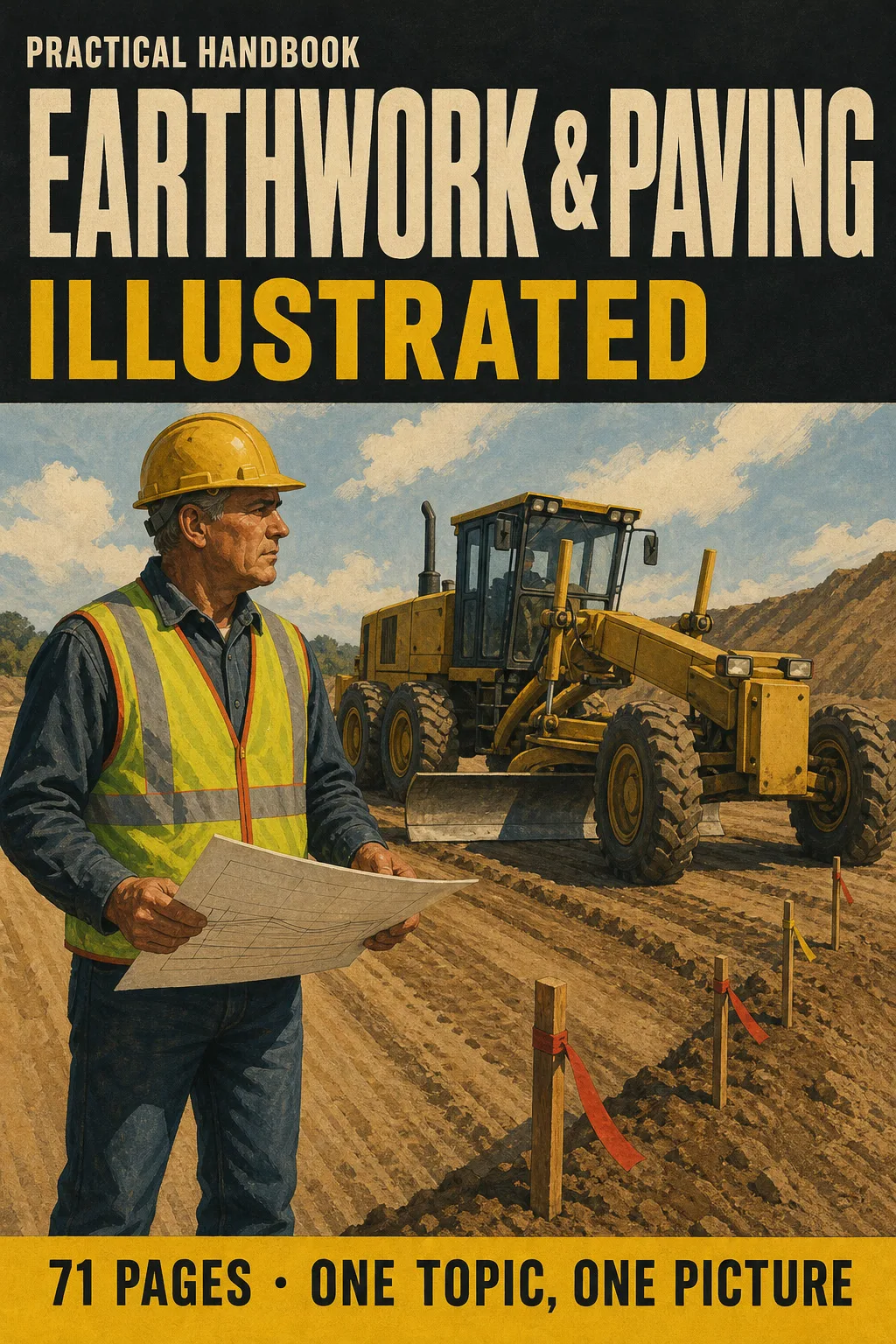
Grading plans, grade stakes, soils, cut and fill, compaction, OSHA trench safety, erosion control and asphalt paving. Every topic gets its own page: the drawing first, then what you need to remember. 71 illustrated pages.

START STUDYING THIS WAY

🔒 Secure checkout · PDF by email · 30-day guarantee

Every topic, its own pageEvery grade stake, slope and layer drawn, with the explanation right beside it
71 illustrated pages8 parts, from reading grading plans to the formula sheet
Up-to-date sourcesOSHA 29 CFR 1926 Subpart P, ASTM compaction standards and FHWA paving guidance
PDF by emailFormat

Look Inside the Book

Every page has one big drawing and a box with the numbers, ratios and steps you need to know:

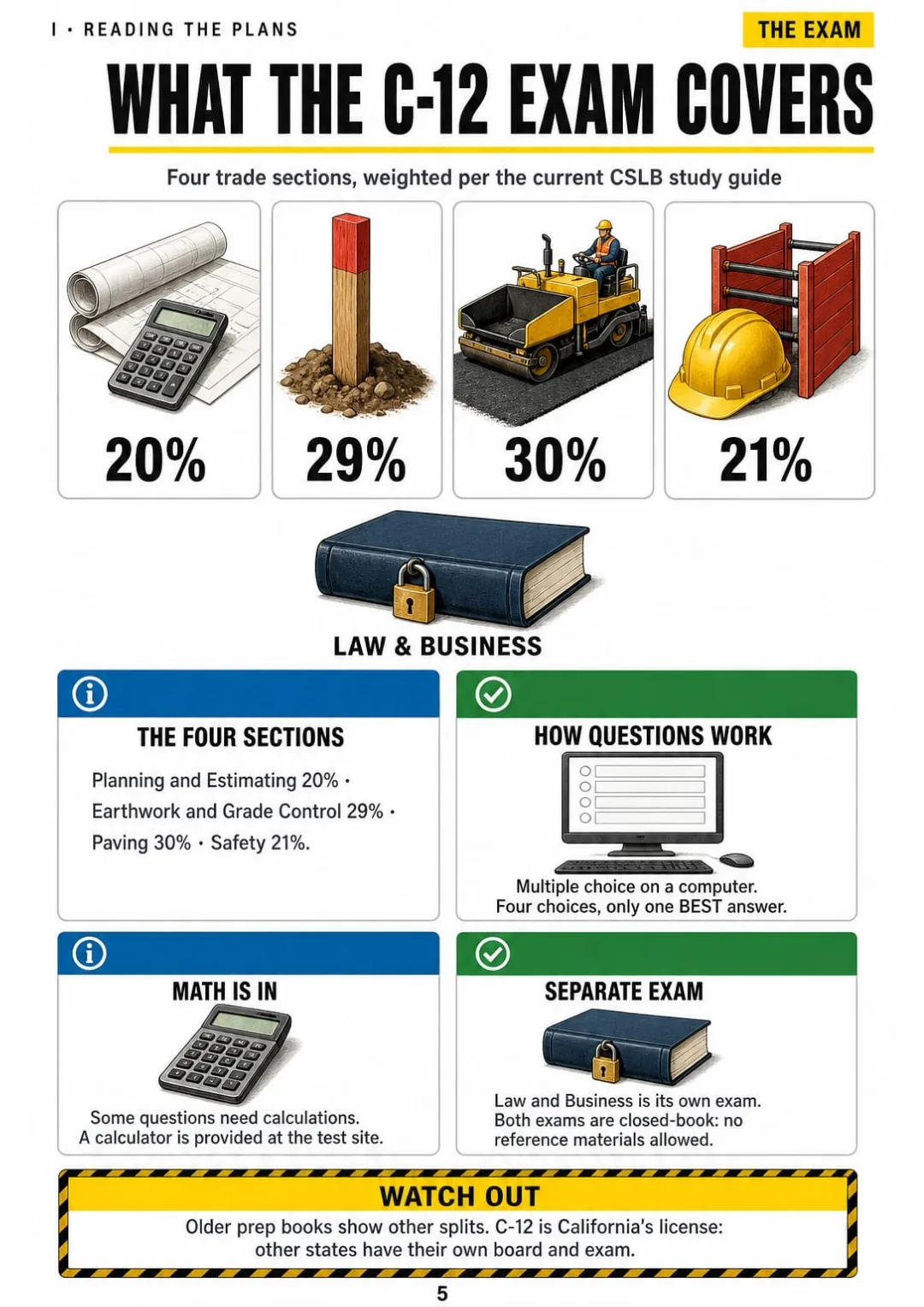
C-12: Estimating 20% · Earthwork 29% · Paving 30% · Safety 21% (exams on or after Sept 1, 2023)
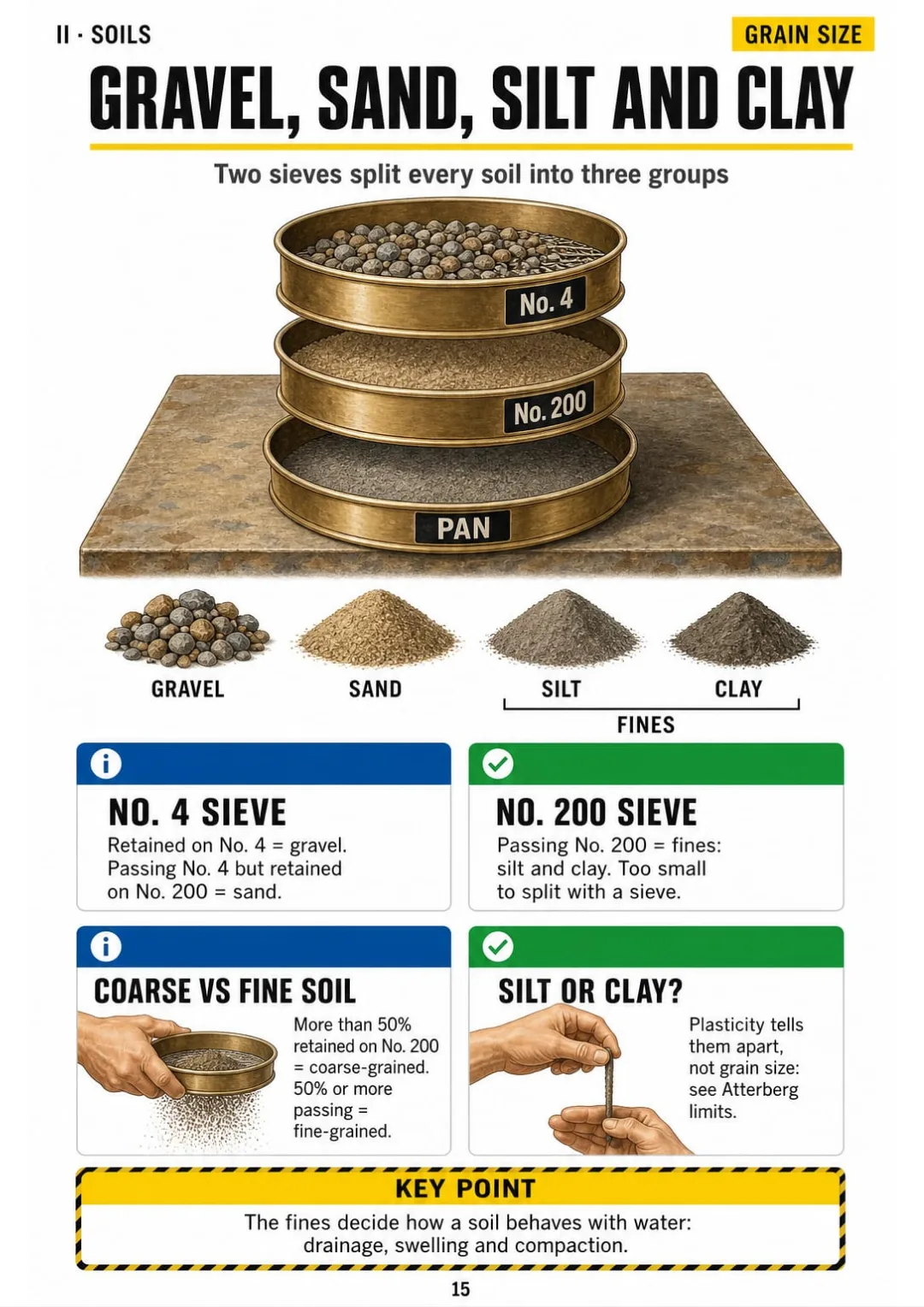
No. 4 splits gravel from sand; No. 200 splits sand from silt and clay.
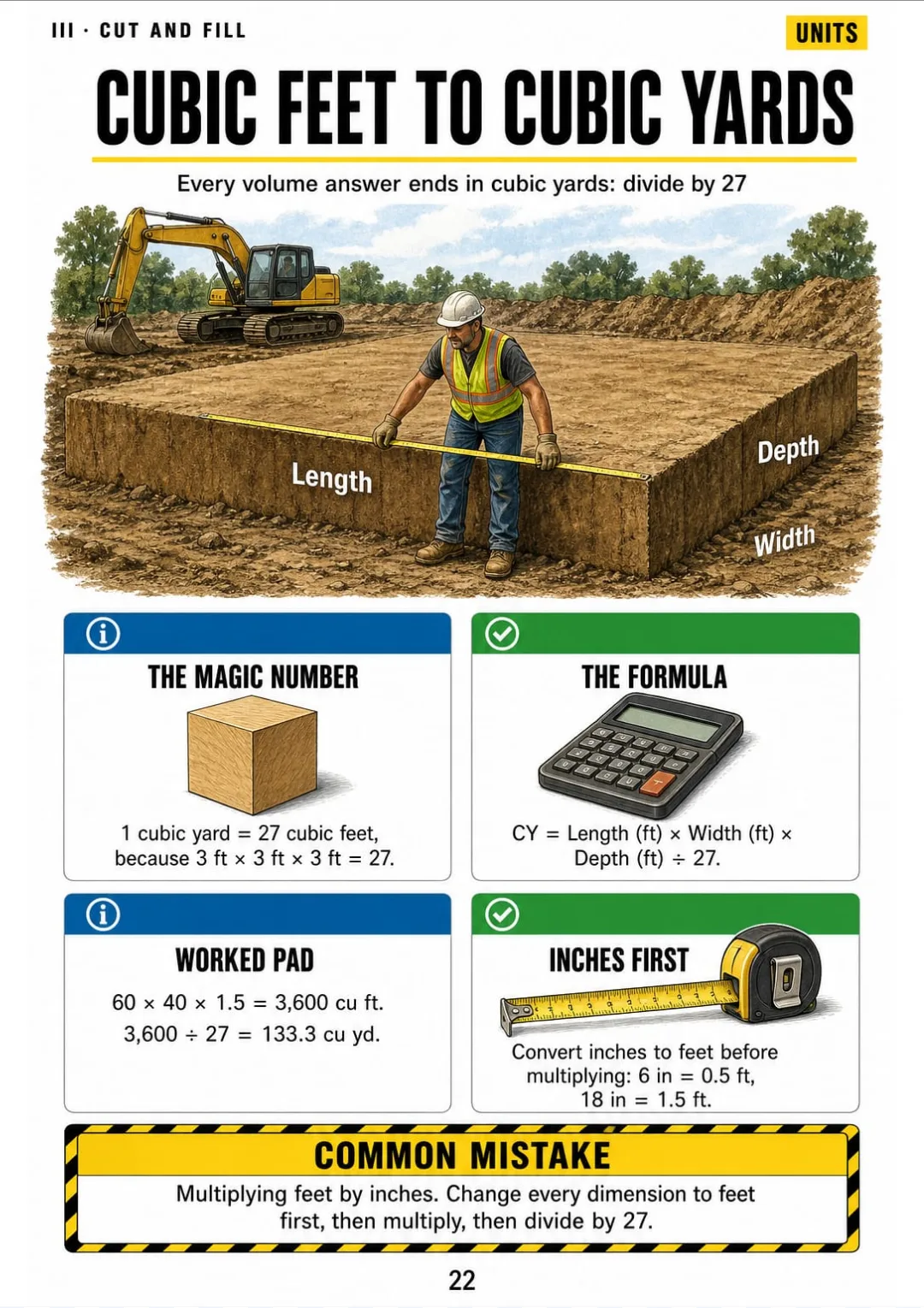
60 ft × 40 ft × 1.5 ft = 3,600 cu ft = 133.3 cu yd
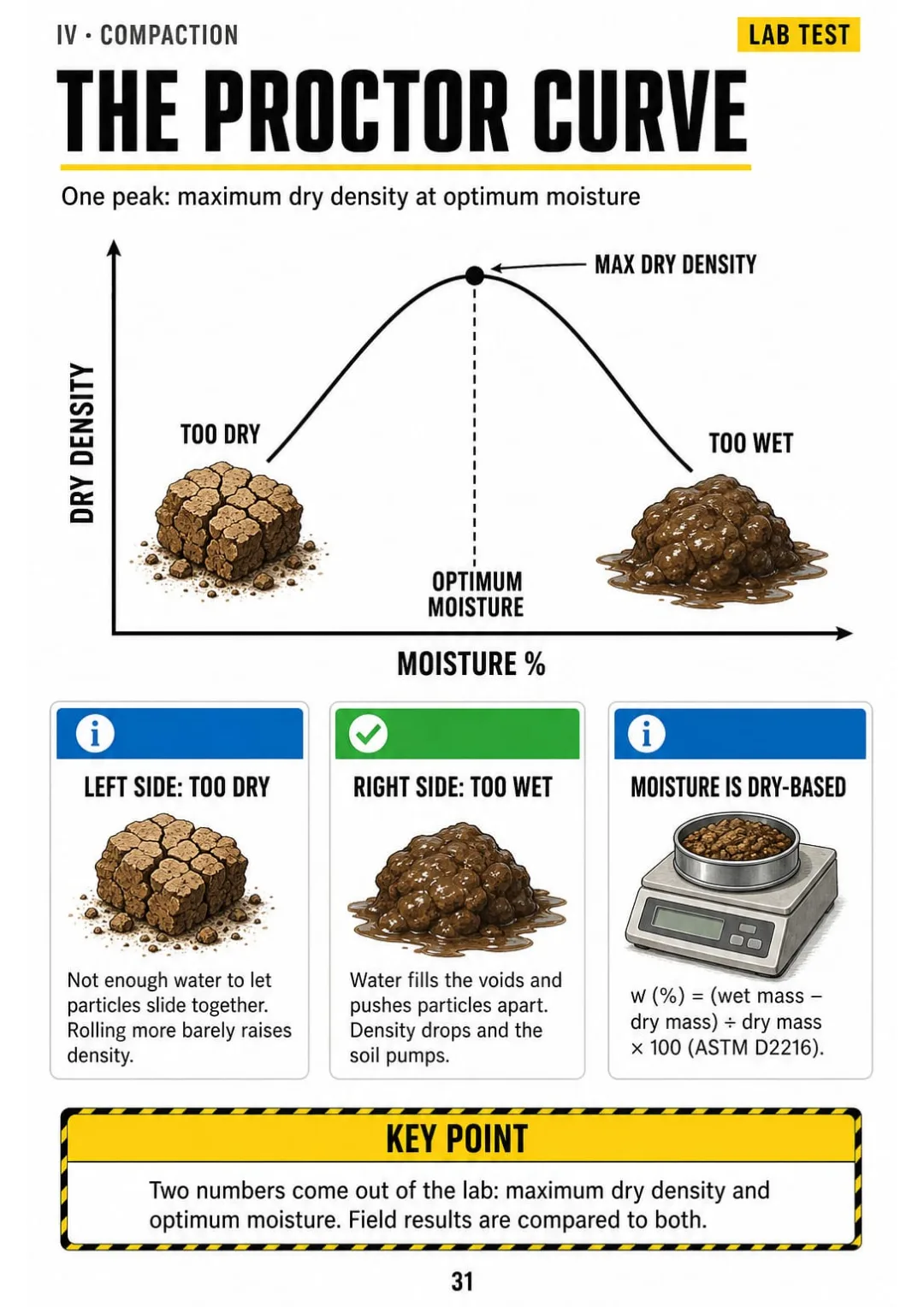
The Proctor curve: peak = maximum dry density at optimum moisture; too dry on the left, too wet on the right.
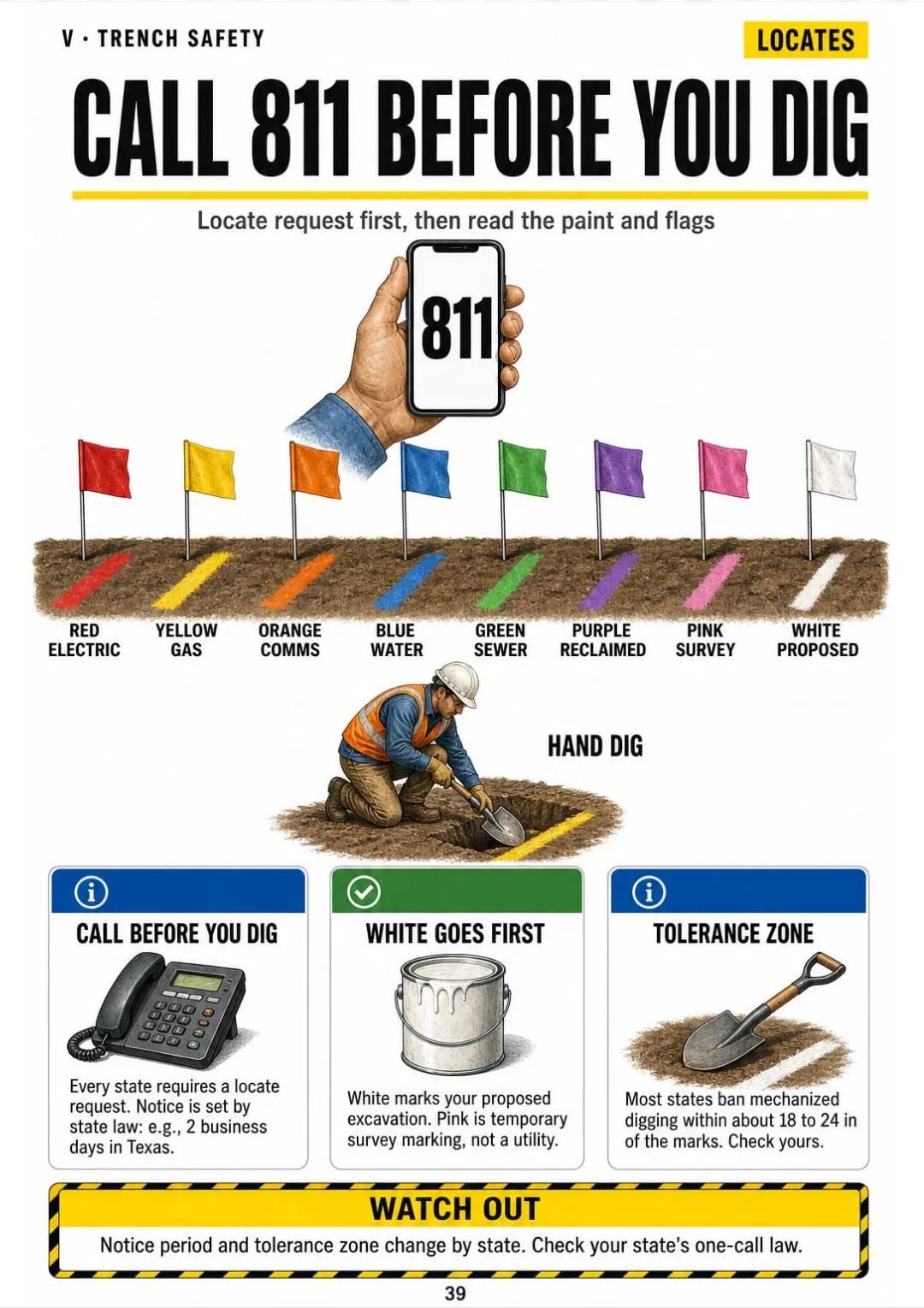
APWA colors: red electric, yellow gas, orange comms, blue water, green sewer, purple reclaimed, pink survey, white proposed.
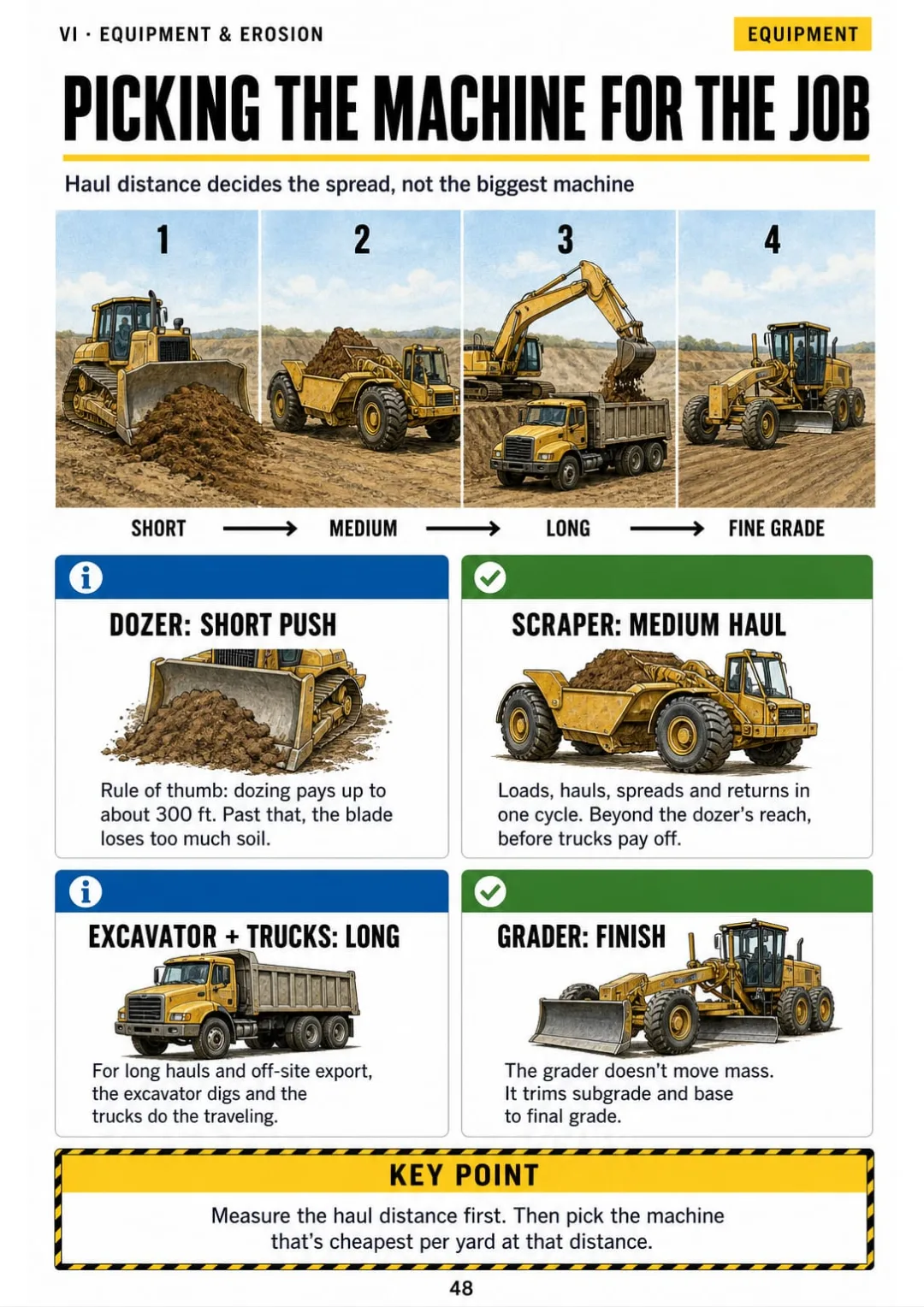
Dozer up to about 300 ft · scraper medium · excavator + trucks long · grader to finish
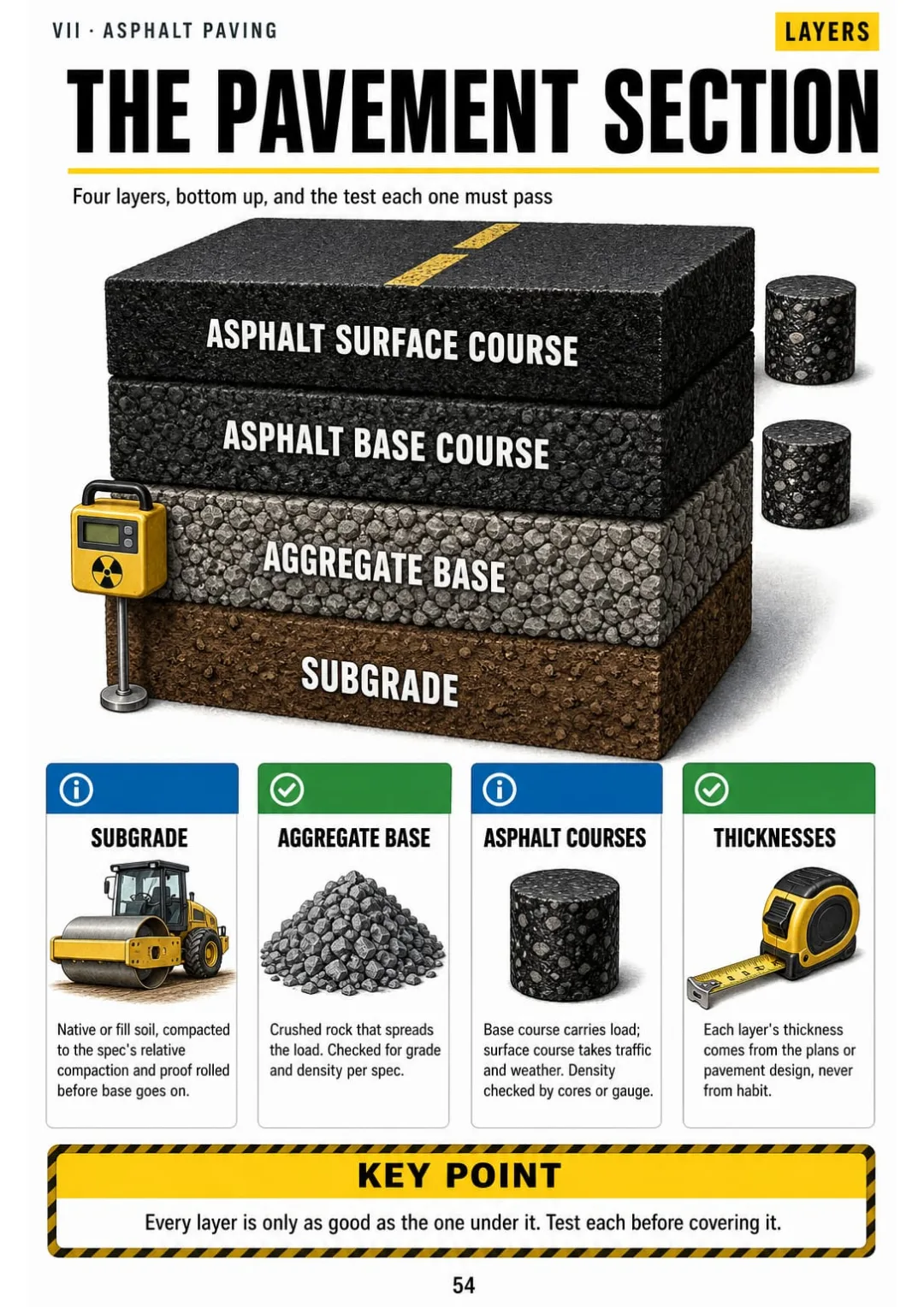
Subgrade → aggregate base → asphalt base course → surface course, each with its test
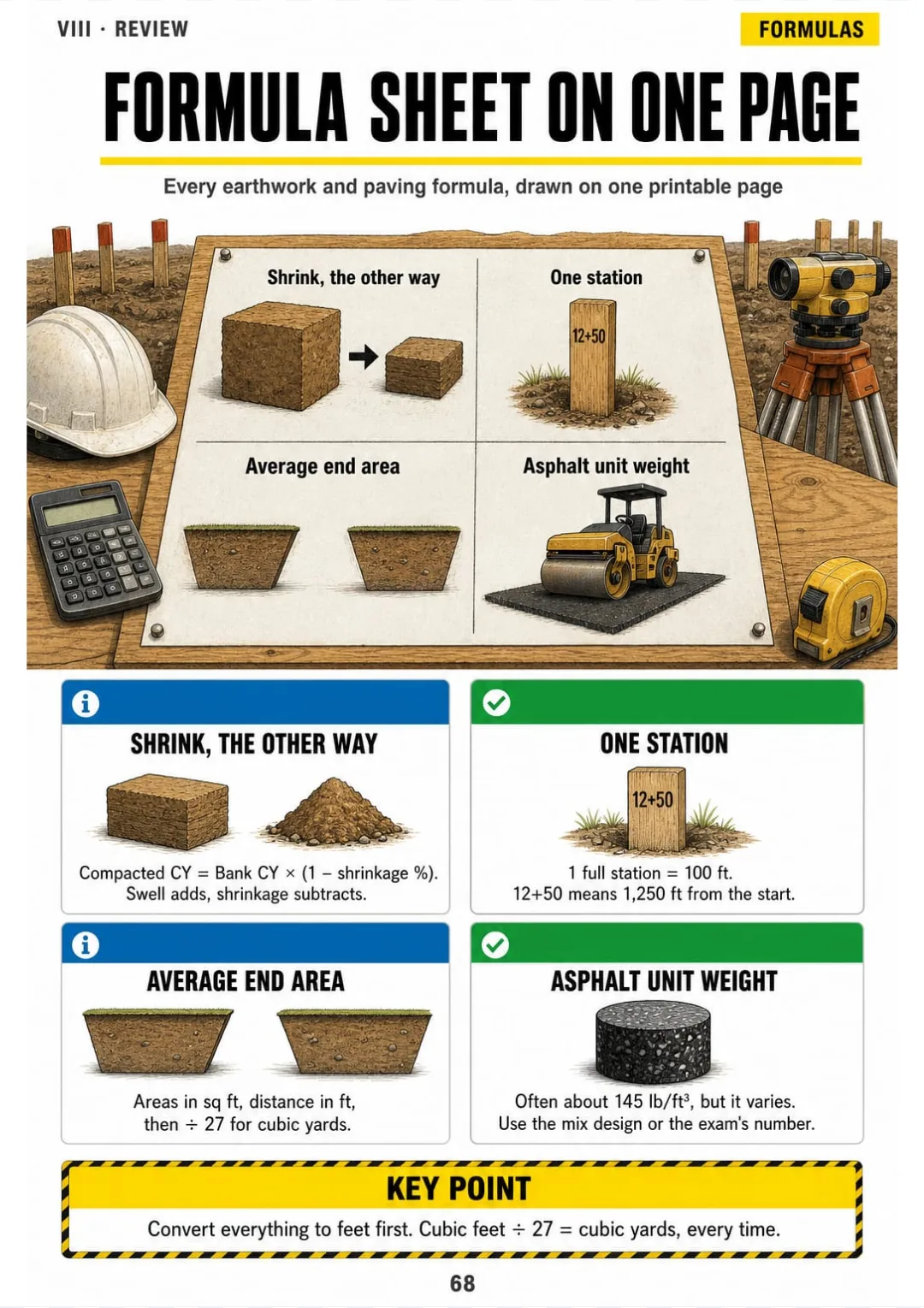
9 formulas, one page: slope %, H:V, HI, cubic yards, end area, swell, compaction, production, asphalt tons

Swipe to see more →

These are real pages from the book. The table of contents is the full one: 8 parts and 67 topics.

The Problem Isn't You. It's How It Was Explained to You.

You're looking at a practice question: a pad 60 by 40 feet, 1.5 feet of fill. How many cubic yards? On the job you'd call it in seconds. On paper, you freeze.

The manual buries it in a paragraph: multiply the dimensions, convert the units, divide by a constant. Nothing shows you why it's 27 and not 9.

60 ft × 40 ft × 1.5 ft = 3,600 cu ft = 133.3 cu yd

In this book it's one page: a cubic yard drawn as a 3 × 3 × 3 ft box, then the pad with its three numbers. 60 × 40 × 1.5 = 3,600 cu ft. Divide by 27: 133.3 cu yd.

Stations and offsets, swell and shrinkage, the Proctor curve, OSHA soil types, the rolling sequence: each one has its own page, drawn the same way.

You see it once, it makes sense, and you work the next volume without going back to the manual.

COMPARE FOR YOURSELF

The Same Topic, Two Ways to Study It

THIS
  • The manual: line after line
  • Soil classes explained only in words
  • You walk into the exam with doubts
Soils are classified according to particle size distribution as determined by sieve analysis. Material retained on the No. 4 sieve (4.75 mm) is designated gravel, whereas material passing the No. 4 sieve and retained on the No. 200 sieve (0.075 mm) is designated sand. Material passing the No. 200 sieve is referred to as fines and is further subdivided into silt and clay on the basis of plasticity characteristics rather than grain size, in accordance with the applicable classification system and its referenced test methods.
FOR THIS
  • Gravel, sand, silt and clay in one drawing
  • The sieve numbers in one box
  • You see it and you get it
No. 4 splits gravel from sand; No. 200 splits sand from silt and clay.
CONTENTS

Take a Look at the 8 Parts and 67 Topics

Reading the site and the plans, soils, cut and fill volumes, compaction, trench and excavation safety, equipment and erosion control, asphalt paving in job order and a final review: 71 pages, all illustrated.

IReading the Site and the Plans · pp. 5-14
  1. What the Earthwork & Paving Exam Covers
  2. Stations and Offsets
  3. Contour Lines at a Glance
  4. Spot Elevations and Contour Interval
  5. Slope in Percent
  6. Slope Ratios H:V
  7. Reading a Grade Stake
  8. Benchmarks and Level Readings
  9. Lasers and GPS Machine Control
  10. Drainage Away from the Building
IISoils · pp. 15-21
  1. Gravel, Sand, Silt and Clay
  2. USCS Soil Symbols
  3. Atterberg Limits in One Picture
  4. AASHTO Classification
  5. Bank, Loose and Compacted Yards
  6. Moisture Content
  7. Unsuitable Soils and Rock
IIICut and Fill Volumes · pp. 22-30
  1. Cubic Feet to Cubic Yards
  2. The 5-Step Cut and Fill Method
  3. Average End Area Method
  4. Reading Cross Sections
  5. Grid Method for Pads and Borrow Pits
  6. Swell: Bank to Loose
  7. Shrinkage: Bank to Compacted
  8. Truck Loads and Haul Count
  9. Balancing a Site: Import or Export
IVCompaction · pp. 31-38
  1. The Proctor Curve
  2. Standard vs Modified Proctor
  3. Relative Compaction
  4. Field Density Tests
  5. Lift Thickness
  6. The Right Roller for the Soil
  7. Proof Rolling and Pumping
  8. When a Test Fails
VTrench and Excavation Safety (OSHA Subpart P) · pp. 39-47
  1. Call 811 Before You Dig
  2. The Competent Person
  3. The 5-Foot and 20-Foot Rules
  4. Soil Types: Stable Rock, A, B, C
  5. Maximum Allowable Slopes
  6. Benching
  7. Shoring and Trench Shields
  8. Ladders, Spoil and Loads at the Edge
  9. Water, Air and Nearby Structures
VIEquipment, Production and Erosion Control · pp. 48-53
  1. Picking the Machine for the Job
  2. Production per Hour
  3. Fine Grading to Tolerance
  4. The SWPPP
  5. Silt Fence, Inlets and Entrances
  6. Dust Control and Final Stabilization
VIIAsphalt Paving in Job Order · pp. 54-67
  1. The Pavement Section
  2. Aggregate Base Ready to Pave
  3. Prime Coat vs Tack Coat
  4. Hot Mix and Binder Grades
  5. Temperatures That Matter
  6. Paver, Screed and Mat
  7. Rolling Sequence
  8. Longitudinal and Transverse Joints
  9. Asphalt Density
  10. Asphalt Tonnage
  11. Weather Limits
  12. Concrete Flatwork Basics
  13. Reading Pavement Distress
  14. Maintenance: Crack Seal, Sealcoat, Mill and Overlay
VIIIReview Before the Exam · pp. 68-71
  1. Formula Sheet on One Page
  2. Numbers to Have at Hand
  3. The Most Common Errors in Calculations
  4. Exam-Day Checklist

One Page, One Topic, All Clear

Think of it this way:

The super hands you two cross sections and asks if the site balances or if you'll need to import dirt. You need the volume, and you need it right.

You open the page on the average end area method and see the two sections drawn side by side, the distance between them, and the formula in a box: (A1 + A2) ÷ 2 × L ÷ 27.

APWA colors: red electric, yellow gas, orange comms, blue water, green sewer, purple reclaimed, pink survey, white proposed.

Same with grade stakes, the Proctor curve, OSHA soil types, the rolling sequence and asphalt tonnage: each one on its own page.

Earthwork & Paving Illustrated is 71 illustrated pages in 8 parts, one topic per page, with a one-page formula sheet, the numbers to keep handy and an exam-day checklist at the end.

What you see drawn, you don't have to memorize.

What's Inside Earthwork & Paving Illustrated:

Ipp. 5-14

Reading the Site and the Plans

What the exam covers, stations and offsets, contour lines, spot elevations, slope in percent and H:V, grade stakes, benchmarks, lasers and GPS, drainage.

IIpp. 15-21

Soils

Gravel, sand, silt and clay, USCS symbols, Atterberg limits, AASHTO, bank, loose and compacted yards, moisture, unsuitable soils and rock.

IIIpp. 22-30

Cut and Fill Volumes

You work any volume the same way: cubic feet to cubic yards, cut and fill in 5 steps, average end area, cross sections, the grid method, swell, shrinkage, truck loads and site balance.

IVpp. 31-38

Compaction

The Proctor curve, standard vs modified, relative compaction, field density tests, lift thickness, the right roller, proof rolling and failed tests.

Vpp. 39-47

Trench and Excavation Safety (OSHA Subpart P)

The trench rules you check at the edge, not in a table: call 811, the competent person, the 5-foot and 20-foot rules, soil types, maximum slopes, benching, shoring and shields, ladders, spoil, water and air.

VIpp. 48-53

Equipment, Production and Erosion Control

Picking the machine, production per hour, fine grading to tolerance, the SWPPP, silt fence and inlets, dust control and final stabilization.

VIIpp. 54-67

Asphalt Paving in Job Order

Pavement section, aggregate base, prime vs tack coat, binder grades, temperatures, paver and screed, rolling, joints, density, tonnage, weather, flatwork, distress and maintenance.

VIIIpp. 68-71

Review Before the Exam

The formula sheet on one page, the numbers to have at hand, the most common calculation errors and an exam-day checklist.

At the end of the book: A one-page formula sheet, the numbers to have at hand, the most common calculation errors and an exam-day checklist.
Plus: 2 Free Books

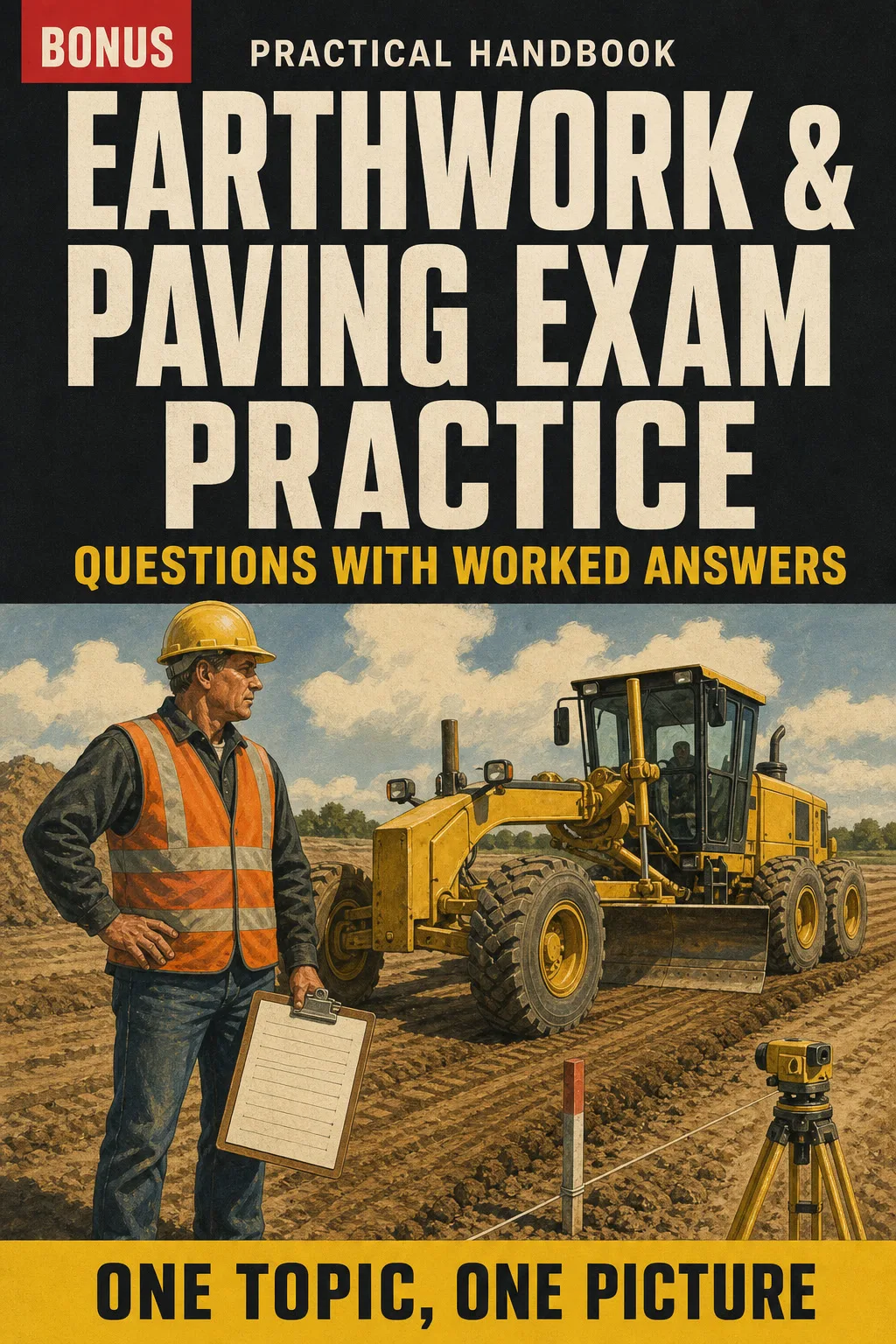
Earthwork & Paving Exam Practice: Questions with Worked Answers

BONUS 1: «Earthwork & Paving Exam Practice: Questions with Worked Answers»

Value on its own: US$ 17.90

Practice with exam-style questions on grading, volumes, soils, trench safety and paving, and see every answer worked out step by step so you know why it's right.

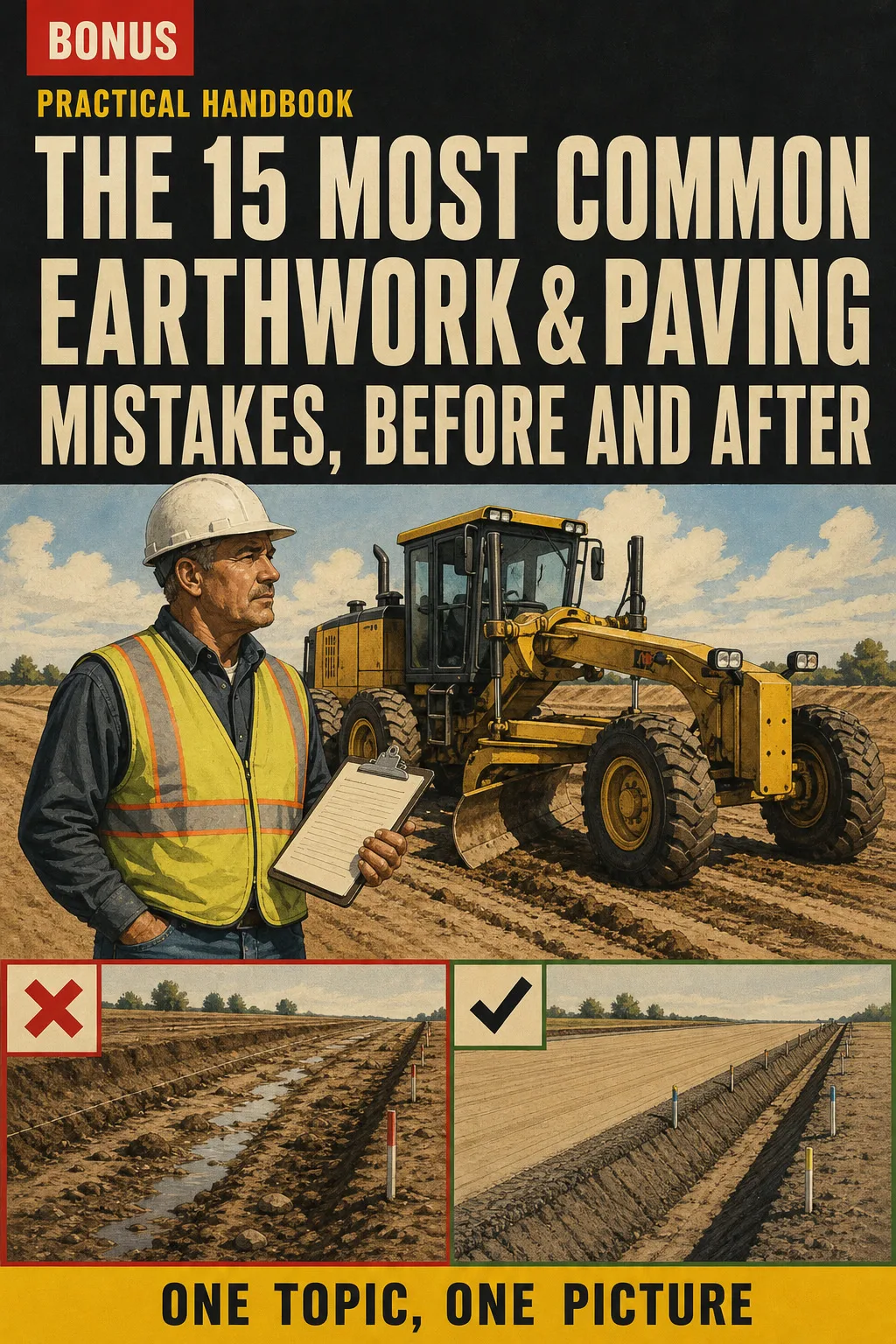
The 15 Most Common Earthwork & Paving Mistakes, Before and After

BONUS 2: «The 15 Most Common Earthwork & Paving Mistakes, Before and After»

Value on its own: US$ 14.90

See the most frequent mistakes on grade, compaction, trenches and asphalt drawn side by side with the right way, so you can review them in minutes before the exam.

Earthwork & Paving Illustrated with 2 Free Books

  • Earthwork & Paving Illustrated: 71 illustrated pagesUS$ 63
  • BONUS 1: Earthwork & Paving Exam Practice: Questions with Worked AnswersUS$ 17.90
  • BONUS 2: The 15 Most Common Earthwork & Paving Mistakes, Before and AfterUS$ 14.90
  • High-resolution PDF to printIncluded
Total value US$ 95.80
YOUR PRICE:
US$ 27
You save US$ 68.80
YES, I WANT EARTHWORK & PAVING ILLUSTRATED FOR US$ 27

📄 This is a digital PDF book sent to your email: nothing is printed or shipped.

Secure purchaseEncrypted payment30-day guarantee

PDF by email: We email you Earthwork & Paving Illustrated as a PDF, together with the two free books. It's a single payment: no installments, no extra charges.

Who This Book Is For

You're starting to study for the license

You're starting to study for the license

You open the book and see what you already do from the seat, drawn on paper and in order. The math and the rules finally have a place.

Your exam date is set

Your exam date is set

Formula sheet, numbers to have at hand and the most common errors in calculations: everything to review in the last weeks, one page at a time.

You already run the crew

You already run the crew

Trench slopes, compaction tests and paving temperatures to keep on the truck. Print it and check a page when you need it.

Everything You Get Today

US$ 95.80US$ 27
YES, I WANT EARTHWORK & PAVING ILLUSTRATED FOR US$ 27

📄 This is a digital PDF book sent to your email: nothing is printed or shipped.

30DAYS
GUARANTEE

30-Day Guarantee

Try Earthwork & Paving Illustrated for 30 days, bonus books included.

We refund everything if the file won't open, if the book isn't what you see here, if you were charged twice or if the email doesn't arrive. Just email us.

You pay once. No subscriptions.

Frequently Asked Questions

Is it for me if I've been running equipment for years but haven't studied in a long time?

Yes. It doesn't teach you to run a machine: it puts on paper what you already do on site, drawn and in order, so the exam questions make sense.

Where does the content come from?

From OSHA 29 CFR 1926 Subpart P, ASTM compaction standards (D698, D1557, D6938, D1556), the EPA Construction General Permit, IRC site grading rules, Asphalt Institute and FHWA paving guidance, and the CSLB C-12 study guide. Values are checked against the current editions. Asphalt temperatures are given as typical ranges: on the job, the mix design and the project spec rule.

Is it official or endorsed by a licensing board?

No. It's independent study material, not published or endorsed by any licensing board or agency. The content is checked against the sources listed above: OSHA, ASTM, EPA, Asphalt Institute and FHWA.

Does it work for my state's exam, or only California?

The book follows the California C-12 outline, but the math, soils, compaction, federal OSHA trench rules and paving work the same in any state. Every state's trade exam is different, so compare the index with your board's outline. It doesn't cover the business and law exam, doesn't give a certificate and doesn't replace official training, safety training or your state's requirements.

Are the practice questions the ones on the exam?

No. They're written for this book, in exam style, with worked answers. They are not official exam questions.

When and how do I get it?

The book and the 2 bonus books come as PDFs by email, to the address you enter at checkout.

Do I have to pay every month?

No. It's a one-time payment.

Can I have it on paper?

Yes. The PDF prints on regular letter paper, so you can keep it in the truck.

How does the refund work?

You have 30 days. We refund everything if the file won't open, if the book isn't what you see on this page, if you were charged twice or if the email doesn't arrive: just email us.

Before You Close This Page

No more rereading with nothing sticking.

The grade stake, the Proctor curve and the trench slope: you see them drawn, and that's it.

You walk into the exam knowing where everything is.

Drawings make studying faster.

The book is right below.

One-time payment: US$ 27 · Guarantee: 30 days · PDF by email

YES, I WANT EARTHWORK & PAVING ILLUSTRATED FOR US$ 27

📄 This is a digital PDF book sent to your email: nothing is printed or shipped.